

Engaging, Supporting, & Sustaining Caregiver Advocates
Executive Summary
Caregiver voices are essential to shaping policies that truly reflect the needs and realities of California’s families. Yet, caregivers, especially those with children with special healthcare needs, are often brought into decision-making spaces too late, asked to share personal experiences without real influence, or left without the support needed to continue their advocacy.
This playbook offers a roadmap for state agencies, health plans, organizations, and other stakeholders to meaningfully engage, support, and sustain caregiver leaders in policymaking. It outlines best practices for building respectful, accessible, and equitable spaces for caregivers to contribute to policymaking, and it includes concrete recommendations and real-world practices.
These recommendations are grounded in the lived experiences of caregivers of children and youth with special healthcare needs as well as Children Now’s work co-facilitating the Caregiver Advocacy Circle, a space designed to provide resources, advocacy support, and a community of peers to help caregivers advocating on the state-level turn health policy ideas into action for California’s kids. Children Now is a policy, research, and advocacy organization dedicated to improving the health, education, and overall well-being of children and youth (ages 0–26) across California.
Many of the caregivers that are members of the Caregiver Advocacy Circle sit on state advisory committees such as Medi-Cal Children’s Health Advisory Panel (MCHAP), Medi-Cal Member Advisory Committee (MMAC), California Children’s Services Advisory Group (CCS), and various Family Advisory Committees for health plans in California. These advisory committees are designed to provide input and recommendations to state agencies and health plans on policies, programs, and services that affect Medi-Cal members. By participating, caregivers bring lived experience and critical perspectives that help shape more equitable, effective, and family-centered systems of care.
When caregivers are engaged with care, supported as whole people, and sustained as long-term leaders, it leads to policies designed by and for families, strengthens trust between communities and government, and improves the wellbeing of families across California.
Quick Links
The Value of Lived Experience in Systems Change
Caregivers are not only witnesses to public health systems—they are daily navigators, negotiators, and problem-solvers within them. Their knowledge is grounded in lived experience: nurturing their child’s growth through moments of joy, curiosity, and quiet triumph, while also navigating complex systems and advocating to ensure their child’s needs are met. Yet too often, public systems do not see caregivers as experts, relying instead on institutional voices alone to shape policies and programs.
To build systems that work for children and families, we must treat lived experience as essential expertise.
While there have been several commendable efforts to engage families in state policymaking through participatory research, advisory committees, and councils, there is still much work to do ensure that caregivers are fully and meaningfully engaged as collaborators and leaders early in the design of policies and programs all the way through implementation and evaluation, rather than just providing input as an afterthought or as a checkbox exercise. 1 2
“The single most important factor for ensuring the successful involvement of families in policy and program activities is commitment to the idea…This point cannot be overstated. Without a deeply held belief that patients and families have unique expertise and knowledge and that their participation is essential to improving services, true collaboration will not occur.”3
– Institute For Patient and Family-Centered Care, quote shared by Nancy Netherland of Kids & Caregivers and member of the Caregiver Advocacy Circle
From Insight to Action
Caregivers bring unmatched and first-hand expertise in children’s physical, emotional, and developmental needs. Caregivers are intimately familiar with the specific contexts in which children grow and thrive. They have a deep understanding of the communities, schools, healthcare systems, and other environments that influence children’s lives. Their perspectives can provide a realistic and grounded viewpoint on the potential impact of policies and ensure that they align with the realities of operating within and across systems. They know the gaps and blind spots of health systems because they’ve had to navigate them—often under immense pressure. Their insights can help agencies move beyond problem identification to building workable, family-centered solutions.
Lived experience helps:
- Identify system-level gaps – including fragmented services, broken referral pathways, and disconnects between policy and practice
- Surface everyday barriers – such as financial, geographic, linguistic, and cultural challenges that limit access to care, services, and supports
- Strengthen policy and program design – by clarifying what works, what doesn’t, and how to make information and services more accessible
- Advance equity and accountability – ensuring policies respond to the lived experiences of those most impacted
- Spark practical, community-informed innovation – surfacing solutions created out of necessity that can be scaled or supported systemically
And critically, when caregivers are involved early and meaningfully in program and policy planning, it leads to more effective and efficient programs, improved outcomes for families, and it results in ongoing collaboration with communities. Policies designed with caregiver involvement are more likely to be practical, relevant, and well-received by the affected communities. Caregivers can offer insights into the potential barriers to implementation, highlight strategies for success, and contribute to the development of policies that are feasible and impactful. 4 5 6
A Legacy of Advocacy—And a Moment of Urgency
There is a long legacy of caregiver-led advocacy and peer-led movements that have shifted public narratives and influenced major systems changes. From legislative reforms to family support networks to grassroots organizing, caregivers have long been architects of change.7 The question isn’t whether caregivers can lead change—the question is whether systems will resource and trust them to do so.
That work is more urgent than ever. We are living through a moment of reckoning around equity, power, and participation. Across healthcare, education, developmental, and social services, there is growing acknowledgment that the people most impacted by policies must shape them. Lived experience is not a bonus perspective—it is a necessary ingredient for justice.
To truly center equity, we must ask: Who is seen as the expert? Who is allowed to lead? If systems continue to fail to incorporate community insight, they will continue to reproduce the same inequities they claim to solve.
Building Trust
If we want families to engage in policymaking, we must build systems that acknowledge the harm they’ve experienced and actively work to heal it. That means building trust.
Families will not engage with systems they do not trust—and they will not trust systems that do not trust them in return.
Designing programs and policies with caregivers is one of the way the state can establish and maintain trust and improve the accessibility and quality of services.8 Involving caregivers in policy design demonstrates respect for their expertise and experience. It fosters trust, transparency, and legitimacy in the policymaking process. Caregivers must then be able to see how their input leads to change. Participation without feedback erodes this trust. Systems must consistently close the loop—offering updates, follow-through, and public acknowledgment of caregiver contributions.
“Trust is seldom used to describe the relationship between individuals and government, yet it is essential in supporting families…We have both witnessed countless examples of families avoiding available programs due to a lack of trust in government or the social stigma associated with accepting assistance. By rebuilding a greater level of trust between government and its people, we can enhance engagement in essential programs…”9
– Marko Mijic, Former California HHS Undersecretary
Caregivers as Co-Architects of the Future
While important strides have been made to include families in policymaking, to truly position caregivers as co-architects of systems that impact their lives, we must go beyond inviting input—we must resource, support, and sustain their leadership. This playbook offers lessons and reflections from the Caregiver Advocacy Circle to illustrate what authentic collaboration can look like. It outlines how caregivers can be meaningfully engaged, supported, and empowered to lead in shaping a better future for families.
“Families don’t just want a seat at the table—they want their voices, and the voices of their children, to be truly heard. That’s how real trust is built and meaningful change begins.”
– Kausha King, Caregiver Advocacy Circle Member
The Purpose of This Playbook: Insights from the Caregiver Advocacy Circle
The Caregiver Advocacy Circle was established by Children Now to address persistent gaps in meaningful and sustained caregiver engagement in California’s children’s health policymaking. Despite important steps toward inclusion through existing advisory groups such as tthe Medi-Cal Children’s Health Advisory Panel (MCHAP), Medi-Cal Member Advisory Committee (MMAC), and California Children’s Services Advisory Group (CCS), many caregivers reported that these spaces did not consistently offer the assistance, preparation, or power necessary to engage as full and equal partners in decision-making. 10
Research by the California Research Bureau affirmed what many families already knew: while there are some bright spots, caregiver participation in state child-serving agencies is often inconsistent, under-supported, and difficult to access.11 Many caregivers lack the tools, compensation, logistical support, and technical assistance needed to participate fully and confidently in policy spaces. In response, and with support from the Lucile Packard Foundation for Children’s Health, Children Now launched the Caregiver Advocacy Circle in 2023 to address these challenges and model a more effective approach.
The Caregiver Advocacy Circle is a structured, ongoing initiative that equips caregivers—particularly those of children and youth with special health care needs—with the information, skills, and support necessary to participate meaningfully in policymaking. The Circle provides tailored technical assistance to advocates who are already engaged in advocacy, helps coordinate collective action and advocacy strategy, equips them with opportunities and resources to scale their advocacy impact, and co-convenes a space for peer support. It serves both as a platform for collective action and as a capacity-building model to prepare caregivers for active roles on advisory councils, workgroups, and legislative efforts.
Crucially, the Circle was designed not only to support its caregiver members but also to generate insights that could inform broader systems change. Through direct collaboration with caregivers, Children Now sought to understand what authentic engagement looks like in practice—and what structures and supports are needed to make that engagement sustainable over time.
This Playbook captures the key lessons, practices, and principles that emerged from the Circle. It offers a roadmap for state agencies, health plans, advocacy organizations, and other partners committed to embedding caregiver voice into children’s policy in ways that are equitable, effective, and enduring.
By centering the lived experience and leadership of caregivers, this playbook aims to strengthen both the design and implementation of family engagement efforts across California.
Recruiting and Engaging Caregiver Advocates
Authentic caregiver engagement begins with a thoughtful, relational, and power-conscious onboarding process. The practices below outline how to welcome caregivers into advocacy spaces in ways that affirm their expertise, set clear expectations, and build lasting trust.
When designing advisory committees or similar spaces, caregiver roles must be designed as opportunities for power-building, not tokenism. From the start, define roles that enable caregivers to shape decisions—not simply react to them. When caregivers are treated as equal partners, they are more likely to trust the process, engage fully, and sustain their involvement over time.
Best Practices:
- Co-create role descriptions with caregivers that outline decision-making responsibilities.
- Establish clear feedback loops by using a “you said, we did” framework to show how caregiver input leads to action.
- Include caregivers in real decision-making spaces, such as hiring panels, governing bodies, planning committees, and policy workgroups. Research from the California Research Bureau shows that nearly two-thirds of state boards and committees involving caregivers are advisory-only, limiting their influence. Additionally, many caregivers we’ve spoken to shared that even within advisory groups, there is often little transparency around how their input is being used or applied. To truly shift power, caregivers must be engaged in roles where their perspectives directly shape policy and program decisions—and where there is clear follow-through and accountability.12
- Ensure early involvement in program or policy design, so their insights influence the foundation, not just the review phase.
- Provide compensation and supports, including childcare, transportation, tech access, and interpretation.
- Acknowledge contributions in reports, public forums, and publications.
For the Caregiver Advocacy Circle, we engaged caregivers to shape the Circle’s purpose, structure, and priorities. We continuously refined our tools and materials based on caregiver feedback, provided stipends with opportunities to weigh in on the amount, co-designed leadership opportunities and experiences, and hired a Circle member to co-design an onboarding process tailored to caregivers’ needs.
“If the advisory panel can’t change policy… then why does it even exist? If we’re going to be talking about a problem, we have to solve it.”
– Jennifer McLelland, Caregiver Advocacy Circle Member
When recruiting for advisory committees or similar spaces, you should consider that caregivers are more likely to join and stay engaged in opportunities introduced by people and organizations they already trust. These trusted messengers—such as family-serving organizations, community-based groups, or peers with shared lived experience—play a critical role in outreach. Trusted messengers can signal safety, authenticity, and cultural alignment, particularly for communities historically excluded or sidelined from policymaking processes.
Best Practices:
- Partner with organizations that have deep relationships with the caregivers you aim to engage.
- Collaborate with community partners to review engagement materials and outreach strategies to ensure cultural resonance.
- Invite trusted messengers to co-facilitate onboarding conversations or orientation sessions.
- Meet caregivers where they are—whether in schools, clinics, or community spaces—recognizing that true equity requires going beyond traditional channels to intentionally reach and include diverse voices.
We partnered with organizations like Family Voices of California and Kids & Caregivers to reach caregivers through trusted networks. These partners helped shape and share our materials, helping build an inclusive, welcoming space.
When recruiting, clarity is essential. Caregivers need to know what the opportunity entails and how it supports their families and communities. Welcoming materials and clearly defined expectations help caregivers feel respected, prepared, and valued from the outset. Avoid ambiguity. Clear, accessible communication builds trust and helps caregivers feel informed, confident, and motivated to participate.
Best Practices:
- Create warm, visually accessible materials that outline purpose, expectations, and supports.
- Use plain language and avoid jargon.
- Include examples of impact and stories of past caregiver contributions.
- During onboarding sessions, walk caregivers through expectations and clarify logistics.
- Be honest about what the group can and cannot influence to avoid overpromising.
For the Caregiver Advocacy Circle, we designed plain-language materials, a detailed webpage with biographies of each member, and we shared examples of how the space has been helpful to members so interested advocates understand how the space can serve them. We made it clear that we are not perfect, and not only welcomed but encouraged criticism on our process and program design to make it better.
Every caregiver brings a unique perspective and set of needs. Personalized onboarding affirms that caregivers are not just participants, but valued partners. It ensures accessibility, builds trust, and demonstrates that caregivers are being seen and supported as individuals.
Best Practices:
- Use interest forms that capture caregiver goals, interests, and accessibility needs.
- Look beyond formal resumes when vetting, and consider asking reflective and affirming questions that recognize the diverse ways caregivers engage in advocacy. For example: “What unique perspectives or experiences do you bring to this work?” or “How do you see yourself contributing to this space?”
- Design demographic questions on race, ethnicity, language, geography, sexuality, disability, and gender to ensure the caregivers you work with are representative of the communities you seek to serve.
- Schedule one-on-one welcome conversations to build trust and co-create engagement pathways.
For the Caregiver Advocacy Circle, we created a survey to learn about interested caregivers’ strengths and personal goals. We gathered demographic information to inform our diversity efforts and collected feedback on the structure of the space. One-on-one onboarding conversations helped us understand caregivers’ interests and shape individualized engagement pathways.
To ensure your recruitment and onboarding processes resonate with caregivers, consider designing the process with caregivers and showcase a commitment to improve the process based on their feedback. This approach ensures materials and systems remain relevant, accessible, and effective.
Best Practices:
- Hire caregivers as paid co-designers to develop onboarding materials and engagement strategies that reflect real caregiver needs.
- Use a collaborative revision process: Share drafts of materials and tools with caregivers for feedback and refinement.
- Name your agency’s learning journey: Be upfront about existing challenges and invite caregivers to help shape solutions.
- Create clear channels for feedback during onboarding and beyond—use surveys, debriefs, and open forums.
- Respond visibly to input: Show caregivers how their suggestions shape updates to language, format, and process.
- Recognize co-design as expertise by crediting and compensating caregivers for their time and leadership.
For the Caregiver Advocacy Circle, we hired a caregiver partner to co-design the onboarding experience and materials. Caregivers regularly reviewed and revised resources with us, and we adopted a “learning in public” mindset that invited continuous feedback and transparent course correction.
Supporting Caregiver Advocates
Once caregivers are invited into advisory bodies or similar spaces to share their perspectives on a policy or program, it’s essential to support them thoughtfully—ensuring they are respected, positioned for leadership, and equipped with the tools and resources they need to advocate effectively, this will be critical for retaining members.
Caregivers in the Advocacy Circle shared that when they are invited into policy spaces—such as advisory committees or workgroups—they are often brought in too late, with limited influence, or asked to share personal stories without meaningful roles in shaping decisions.
To move beyond tokenism, agencies must create spaces of shared power where caregivers are engaged as co-creators and leaders—working alongside staff and policymakers to shape priorities, solve problems, and build policies that reflect lived experiences.
Authentic engagement fosters trust, transparency, mutual learning, and lasting collaboration. It means listening deeply, involving caregivers early, and ensuring their input is reflected in decision-making. It also means creating relational, inclusive environments where caregivers feel respected, heard, and supported to lead.
Best Practices:
- Encourage active dialogue, collaboration, and shared decision-making by co-designing agendas with caregiver advocates early on, and involving them in priority-setting, policy development, implementation, and evaluation.
- Structure meetings for co-leadership, not consultation; provide real decision-making or voting power.
- Don’t take up space. Pause and actively listen to caregiver advocates and genuinely hear their concerns, experiences, and recommendations.
- Create space for relationship-building through regular one-on-one check-ins, peer support, and reflection.
- Respond to caregiver input by clearly showing how it shaped policies or identifying next steps.
- Foster transparent and open communication channels (e.g secure messaging platforms like Signal, email, phone, social media, etc.) to keep caregiver advocates informed about the policymaking process. Share relevant information, updates, and timelines with them, and provide opportunities for two-way communication, allowing caregiver advocates to ask questions, seek clarification, and provide feedback.
- Recognize and respect the diversity of caregiver advocates and create an inclusive environment that values their unique perspectives and experiences. Consider the intersectionality of caregiving, acknowledging the diverse backgrounds, identities, and needs of caregivers, and ensure that their voices are represented and respected.
- Co-design accessible, inclusive meetings that prioritize connection, stories, and shared purpose with caregivers
In the Caregiver Advocacy Circle, caregivers shaped agendas, co-led meetings, and built a space rooted in trust and care. We prioritized relationships, reflection, and open dialogue—striving to model what authentic, collaborative engagement can look like.
“They want parents there, but you’re silenced. Meetings are so packed there is no room to share what’s going on in your community or your experience.”
– Susan Skotzke, Caregiver Advocacy Circle Member
“Share power. There should not be a place where caregivers are without voting power. It’s our lives, It’s our kids. We are most affected. We have the greatest to lose and yet we are not the loudest voice.”
– Nancy Netherland, Caregiver Advocacy Circle Member
To meaningfully engage caregivers as co-leaders in policymaking, state agencies must do more than invite participation—they must build the infrastructure that allows caregivers to thrive in leadership. This includes offering ongoing support, education, data access, training, and opportunities for connection so that caregivers can navigate policy spaces with confidence, clarity, and influence.
This investment is essential for retention. Caregivers in the Circle shared that while invitations to join advisory spaces are important, staying engaged requires deeper support. Without it, many caregivers experience burnout, confusion, or disengagement—especially when entering complex systems where expectations are high and guidance is limited.
To prevent this, agencies must proactively offer and invest in a range of supports. Often, this will mean partnering with caregiver-led, community-based, or advocacy organizations who already have trusting relationships to offer effective support. These partners can help fill critical gaps—offering technical assistance, policy literacy, coaching, and mentorship—so that caregivers are not just present, but positioned to lead.
Authentic caregiver engagement is rooted in power-sharing—which means meeting caregivers where they are and making information clear, accessible, and actionable. While caregivers bring invaluable lived experience, they may not always be familiar with policy language, data, decision-making strategies, or system-specific terminology. Creating a shared language and offering tools, context, and strategic knowledge is not just supportive—it is respectful. It demonstrates a genuine commitment to collaboration and shared leadership. The Caregiver Advocacy Circle at Children Now was designed to provide this kind of technical assistance, and it has proven essential to helping caregivers grow, lead, and drive change.
Family Voices of California’s Project Leadership program is another strong example of a family-serving organization equipping caregivers with the training, tools, and support they need to advocate effectively in policy and healthcare spaces.
Caregivers shared several supports they need in order to effectively advocate when working with state agencies—many of which we provided through the Circle:
Policy Education & Strategic Orientation
Caregivers need a strong foundation in how systems and policies work so they can effectively advocate for change. This includes not only understanding policies and acronyms but access to data, knowing how to time their advocacy, how to communicate effectively in meetings, and how to connect their priorities to key decision-makers.
Best Practices:
- Provide targeted education on policy issues, processes, and systems (e.g., Medi-Cal, child welfare, disability rights, state budget calendar, etc.).
- Offer plain-language policy briefings and access to clear and up-to-date data summaries that explain current challenges and opportunities.
- Equip caregivers with issue-specific toolkits to support action.
Share guidance on strategic advocacy—how to align priorities with key people, timelines, and windows of influence as well as leveraging social and political capital to connect, support, and elevate caregiver roles in policy work.
Skill-Building, Coaching & Co-Creation
To lead, caregivers need opportunities to build and exercise advocacy skills—such as storytelling, policy analysis, and agenda-setting. Just as importantly, they should be invited to co-create content, strategies, and solutions alongside system leaders.
Best Practices:
- Facilitate mentorship and coaching that supports caregiver leadership development.
- Offer professional development opportunities like public speaking, media engagement, storytelling, and narrative framing.
- Design tailored trainings that help caregivers connect their lived experiences to policy change, and build their understanding of the policy landscape, systems navigation, and rights-based frameworks on relevant issues (e.g., disability, health equity).
- Support peer-to-peer policy mentoring by creating opportunities for caregiver advocates to connect, share experiences, and learn from one another to deepen their understanding of policy pathways.
- Enable caregivers to co-create policy content, including briefs, recommendations, and training materials, as well as feedback on state-created materials when requested.
- Embed bidirectional agenda-setting processes where caregivers shape policy priorities, goals, and measurements in partnership with agencies.
“It is helpful to have an education session first on the topic before diving in on input. Using common plain language and defining terms makes policymaking spaces less intimidating and also makes it easier to lead and engage.”
– Jennifer McLelland, Caregiver Advocacy Circle Member
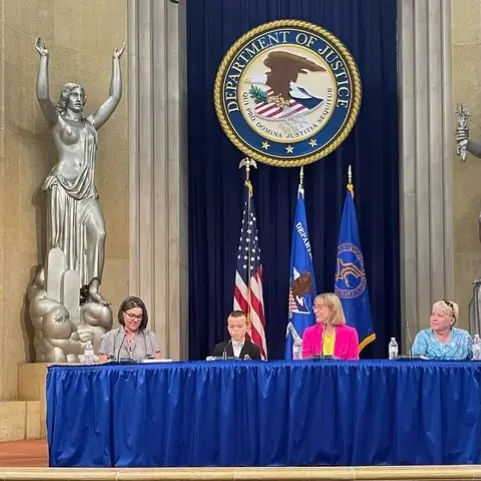
Jennifer McLelland, Caregiver Advocacy Circle Member, and her son speaking at the Department of Justice for the 25th Anniversary of the Olmstead Supreme Court ruling.
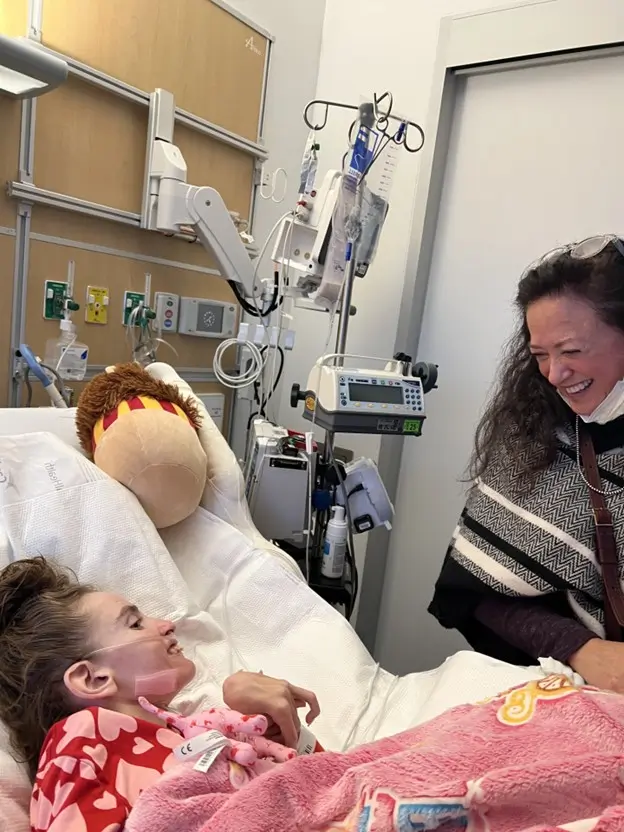
Susan Skotzke’s daughter and Kimberly De Serpa, the elected Supervisor representing District 2 on the Santa Cruz County Board of Supervisors.
Caregiving often involves profound emotional labor—grief, loss, burnout, and exhaustion—which are rarely acknowledged in policy spaces. To truly support caregiver advocates, systems must be trauma-informed, grief-aware, and healing-centered.
Caregivers need spaces where they are not only seen as experts, but as whole people. This means normalizing rest, integrating care and restorative practices, and affirming that their leadership remains valuable even during times of personal hardship.
Best Practices:
- Normalize taking breaks without penalty or loss of participation.
- Affirm that bereaved caregivers’ stories and leadership remain powerful.
- Integrate moments of care and reflection into meetings.
- Offer or connect caregivers to healing and support spaces or self-care resources outside of policy work.
- Check in with caregivers before and after emotionally demanding activities—such as advisory committee meetings, focus groups, or policy discussions—to offer encouragement, acknowledge any nerves, and affirm their effort. These moments of care show respect for the emotional labor involved and remind caregivers that their wellbeing matters as much as their contributions.
In the Caregiver Advocacy Circle, we reminded members that stepping back was welcome and supported. We reached out to caregivers outside of meetings to offer connection and care, without placing any expectations on their involvement. And when a member lost a child, we paused for collective grief and affirmed that their voice was still welcome, whenever they had capacity to return.
Caregiver engagement is only meaningful when it is truly accessible and inclusive. Many caregivers face barriers often overlooked in traditional policy spaces—such as limited time, digital access, language needs, caregiving duties, disability, lack of professional development supports, and geographic isolation. Without intentional design, these barriers can exclude the very voices systems aim to uplift.
Accessibility is not just about format—it’s about equity. Inclusive engagement requires proactively designing for caregivers of all racial, linguistic, gender, sexual, disability, geographic, and cultural backgrounds—and ensuring they are fully supported to participate once at the table.
Best Practices:
- Offer multiple ways to participate—such as video conferencing, phone, in-person meetings, messaging apps, and email—and provide tech support or tools as needed to address digital access barriers and ensure equitable participation.
- Share materials in plain language, with translations, glossaries, and visual aids.
- Communicate early and often; allow flexible deadlines and send reminders.
- Provide interpretation, real-time captions, and large-print materials.
- Co-create guiding principles and shared language to ensure a respectful and inclusive space.
- Support in-person participation with childcare, transportation, and meals.
- Schedule meetings based on caregivers’ availability and preferences.
- Assign a point person to support communication between meetings.
In the Caregiver Advocacy Circle, we co-created guiding principles and language guidelines with caregivers to ensure everyone felt respected and safe. We offered flexible communication options—including Signal, phone, email, and video conferencing—and adapted scheduling based on caregiver needs. Caregivers shared how early they preferred to receive notice and how often they wanted reminders, which informed our approach. We provided ample notice, timely reminders, and remained accessible between meetings to respect their time and responsibilities.
When engagement is grounded in care, access, and respect, caregivers can show up—and stay engaged—as their full selves.
Caregiver advocacy is skilled, emotional, and time-intensive work—and should be treated accordingly. Fair compensation honors caregivers’ time, labor, and lived expertise, while removing financial barriers to participation. It’s not just a best practice; it’s a matter of equity, access, and respect.
Why Fair Compensation Matters:
- Recognizes expertise: Caregivers offer firsthand insights that strengthen policy design and accountability. Their knowledge is essential—not optional.
- Promotes inclusion and access: Payment removes financial barriers, enabling caregivers from all backgrounds to engage fully and consistently.
- Respects time and opportunity cost: Advocacy takes time away from work, caregiving, and other responsibilities. Compensation honors that investment.
- Supports sustainability: Long-term engagement is only possible when caregivers are resourced to participate without burnout.
- Shifts power dynamics: Paying caregivers helps level the playing field in policymaking spaces where power is otherwise concentrated.
- Professionalizes advocacy: Fair pay affirms that caregiving advocacy is a valuable and legitimate contribution worthy of ongoing skill-building and development.
Best Practices:
- Compensate caregivers for meetings, prep, follow-up, and storytelling at a fair rate and get feedback from caregivers on what that rate should be
- Cover costs such as childcare, transportation, internet, interpretation, and meals.
- Create paid roles for caregivers in program design.
- Provide contracts or stipends for caregivers in leadership or mentorship roles.
- Compensate public storytelling as emotional labor—with re-consent and control over how stories are used.
- Advocate for caregiver and youth compensation policies across all state departments and engagement efforts.
In the Caregiver Advocacy Circle, we provided stipends that covered time spent preparing for meetings, participating in meetings, and leading meetings. To ensure our compensation approach was equitable and meaningful, we conducted research and gathered input from both caregivers and partner organizations on appropriate rates before launching the program. We also offered an anonymous feedback process in our onboarding survey for caregivers to share whether the stipend felt sufficient. This allowed us to remain accountable and adjust as needed, honoring the value of caregivers’ time, labor, and lived expertise.
Sustaining and Retaining Caregiver Advocates
Engaging and supporting caregivers is only the beginning. Sustaining their participation requires thoughtful infrastructure, relational support, and ongoing investment. Caregivers carry the weight of complex emotional, logistical, and financial responsibilities. Their sustained involvement in policy spaces requires not only access, but care, responsiveness, and meaningful support.
Through our work at the Caregiver Advocacy Circle, we learned that caregivers stay involved not just because they care—but because the spaces they are invited into are built to support them as whole people, evolving leaders, and agents of change. Sustaining caregiver engagement means designing systems that are relational, reciprocal, relevant, and resilient.
Caregivers’ stories, insights, and time are powerful contributions—and they deserve to lead to visible outcomes. When feedback goes unacknowledged or unacted upon, trust and engagement quickly erode. To sustain caregiver participation, agencies must build regular, transparent feedback loops that demonstrate how caregiver input is shaping decisions, improving processes, and informing systems change.
Caregivers should know what happens after they speak up—even when change takes time. Policy shifts can be slow, but communication should not be. Timely updates, honesty about next steps, and clarity around impact are essential to maintaining trust and momentum.
“Feedback loops are critical. If you get input from caregivers act on it, make a change, and clearly show how caregiver insights directly shaped those outcomes.” – Jennifer McLelland, Caregiver Advocacy Circle Member
Best Practices
- Integrate feedback moments in every meeting (e.g., closing reflections, “what worked/what didn’t” rounds).
- Provide anonymous channels for feedback (e.g., surveys, forms, or having a parent partner be an intermediary).
- Assign a dedicated notetaker to document caregiver recommendations to ensure ideas are tracked, followed up on, and not lost or dismissed later.
- Respond to caregiver policy input by:
- Sharing how it’s being used
- Naming what can change now vs. later
- Highlighting its influence on decisions or strategy
- Feature caregiver contributions in reports and policy documents
- Invite caregivers to co-review and improve engagement processes
In the Caregiver Advocacy Circle, we strived for consistent, accessible feedback loops. Caregivers could share thoughts with us directly during meetings, between meetings, or anonymously—either through surveys or by connecting with our contracted parent partner. We co-designed agendas that reflected their priorities and followed up on requests and questions. Even when updates were limited, we strived to communicate about timelines and how advocacy was progressing. Caregiver insights were woven into our collective advocacy materials, and one-on-one check-ins allowed us to gather deeper feedback and refine the space to better meet caregivers’ needs.
“Feedback loops are critical. If you get input from caregivers act on it, make a change, and clearly show how caregiver insights directly shaped those outcomes.”
– Jennifer McLelland, Caregiver Advocacy Circle Member
Caregiver engagement is strongest when relationships are consistent, flexible, and grounded in care. It’s not enough to connect during scheduled meetings—caregivers need to know support is available between touchpoints, too.
State agencies can demonstrate this by remaining proactively accessible through informal supports like office hours, open office days, or drop-in Zoom calls where caregivers can ask questions, debrief, or connect with staff. When a caregiver steps back, agencies should respond with understanding—offering support, honoring their contributions, and leaving the door open for return. If welcomed, an exit conversation can also provide valuable feedback for improving the space.
Best Practices:
- Consider the frequency of your meetings with capacity, relationship-building, and sustained engagement in mind.
- Host recurring virtual office hours or caregiver check-ins.
- Provide flexible communication options—email, messaging platforms, etc.
- Assign a consistent, trusted point of contact for support.
- Offer optional exit conversations for caregivers stepping away.
In the Caregiver Advocacy Circle, we prioritized ongoing connection. Children Now staff held office hours; made ourselves available through Signal, email, and phone; and allowed caregivers to schedule time with us whenever they needed. When caregivers needed to step away, we let them know we were there if they wanted to talk—and that the door was always open to return when they were ready.
“If we don’t come together often it’s hard to stay engaged or know what the issues are.”
– Susan Skotzke, Caregiver Advocacy Circle Member
Policy change is slow and often behind the scenes. Without regular moments of reflection and recognition, caregivers can feel discouraged or disconnected from their impact. Agencies can help sustain momentum by celebrating both small and significant wins—and by showing how each contribution drives broader change.
Success isn’t just passing legislation—it’s sharing a story for the first time, stepping into a new role, or building confidence. Recognizing these moments keeps caregivers motivated, grounded, and hopeful.
Best Practices:
- Track caregiver contributions over time.
- Celebrate milestones in newsletters, meetings, or reports.
- Recognize caregivers through:
- Spotlights in materials and presentations
- Public acknowledgments and features
- Opportunities to co-author or speak
- Name policy shifts or wins influenced by caregiver leadership.
In the Caregiver Advocacy Circle, we celebrated openly and often. Every meeting included space for caregivers to shout each other out, reflect on progress, and lift one another’s leadership. We honored caregiver contributions—even when they weren’t in the room—to affirm their value and sustain momentum.
One-time engagement gathers input—but it doesn’t build power. Caregivers should be recognized as long-term partners in shaping systems. State agencies must invest in sustained structures that embed caregiver leadership throughout policy planning, implementation, and evaluation.
This means creating standing advisory roles, leadership pipelines, paid fellowships, and multi-year caregiver leadership programs that are fully integrated into policymaking—not siloed.
Best Practices:
- Establish multi-year caregiver engagement programs with rotating leadership and sustained support.
- Offer paid positions and standing advisory roles to value caregivers’ contributions as skilled labor.
- Track individual caregiver growth and provide tailored leadership development and visibility opportunities.
- Partner with advocacy organizations for mentorship, training, and technical assistance.
- Hire caregivers into full-time decision-making roles within agencies.
At Children Now, we designed a contracted leadership position within the Caregiver Advocacy Circle and created a pathway for caregivers to co-lead meetings. We are actively exploring additional long-term leadership opportunities to ensure caregivers can continue shaping our work in meaningful ways.
Long-term impact requires more than programs—it demands a cultural shift. Agencies must commit to power-sharing, authentic collaboration, and co-creation with caregivers and youth.
That means shifting from extractive models to shared leadership and embedding practices that recognize and finance lived expertise. Organizational values should reflect the principle: “Nothing about us, without us.”. This is critical for retaining caregiver advocates because people stay engaged when they feel valued and trust that those they are working with are committed to building power alongside them.
At the same time, agencies should recognize and elevate the work already happening across California. Many local groups—and families themselves—are building inclusive, family-led solutions. Rather than starting from scratch, the state should collaborate with, invest in, and learn from these trusted partners.
Cultural Shifts to Embrace:
- Commit to bidirectional change and shared control.
- Co-create policies with, not just for, caregivers and youth.
- Prioritize caregiver and youth narratives as policy-shaping expertise.
- Address “othering” and systemic exclusion.
- Plan for leadership succession rooted in lived experience.
Best Practices:
- Honor and amplify existing family-stakeholder partnerships.
- Build infrastructure to collaborate with and scale community-driven solutions.
- Normalize policies co-created by caregivers.
- Embed equity in the organization’s DNA—not just in programs.
Children Now is committed to aligning our internal practices with our values of anti-racism and centering community voices. Through the Circle, we’ve intentionally shared power with caregivers, embedded their feedback into decision-making, and prioritized equity and co-creation as guiding principles across our advocacy work.
Conclusion
Authentic, power-building caregiver engagement requires thoughtful onboarding, consistent support, and structures that sustain engagement over time. This playbook offers key lessons from the Caregiver Advocacy Circle and the caregivers who generously contributed their stories, insights, and vision. It outlines what it takes to not only bring caregivers into policy spaces, but to build the conditions for them to lead with confidence, clarity, and care.
When agencies and organizations invest in strong, caregiver leadership, it leads to policies designed by and for families, builds trust between communities and government, and improves the well-being of families across California. These recommendations apply equally to our efforts at Children Now, as we continue to learn and authentically share power with caregiver advocates.
This playbook is offered in the spirit of collective learning and shared accountability—so that together, we can build a future where caregivers are not only heard, but respected as experts, trusted as partners, and empowered to shape the policies and programs that support family health and well-being.
For a compacted version of recommendations for engaging, supporting, and sustaining caregivers, download the checklist below:
Acknowledgements
Members of the Caregiver Advocacy Circle: Alison Beier, Celeste Chacon, Diana Vega, Gina Stable, Jan Schumann, Jennifer McLelland, Kausha King, Kristen Rogers, Lianna Chen, Luis Aponte, Nancy Netherland, Shelley Lopez, and Susan Skotzke.
In memory of Diana Skotzke
Contributions by Tamira Daniely, Kelly Hardy, and Mike Odeh at Children Now
Design by Nima Rahni and Jose Murillo.
Organizations that helped advance our work along the way: Kids & Caregivers and Family Voices of California.
Support for this work was provided by the Lucile Packard Foundation for Children’s Health. The views presented here are those of the authors and not necessarily those of the Foundation or its staff. Learn more at LPFCH.org/CYSHCN.
Endnotes
- Children Now. (2020). Fact sheet: Findings on family engagement from California Research Bureau. Lucile Packard Foundation for Children’s Health. https://lpfch.org/resource/fact-sheet-findings-on-family-engagement-from-california-research-bureau/
- It Takes a Family: An Analysis of Family Participation in Policymaking for Public Programs Serving Children with Special Health Care Needs in California
O’Sullivan, M. (2014, May). It takes a family: An analysis of family participation in policymaking for public programs serving children with special health care needs in California. Lucile Packard Foundation for Children’s Health. Retrieved July 7, 2025, from https://lpfch.org/resource/it-takes-a-family-an-analysis-of-family-participation-in-policymaking-for-public-programs-serving-children-with-special-health-care-needs-in-california/ - Institute for Patient- and Family-Centered Care. (in press). Essential allies: Patients, residents, and families as advisors.
- Marbell, P. (n.d.). Engaging families in improving the health care system for children with special health care needs. Lucile Packard Foundation for Children’s Health. https://lpfch.org/wp-content/uploads/2024/02/engaging_families_in_improving_the_health_care_system.pdf
- Apenteng, B. A., Kimsey, L., Opoku, S. T., Owens, C., Peden, A. H., & William, M. (2022). Addressing the social needs of Medicaid enrollees through managed care: Lessons and promising practices from the field. Population Health Management, 25(1), 119–125.
- Isaacson, R., Sharma, L., Cohen, M., & Hodin, R. M. (2019). “The biggest value is getting the voice of the member:” An exploration of consumer advisory councils within Medicare-Medicaid plans participating in the Financial Alignment Initiative. Center for Consumer Engagement in Health Innovation. https://www.healthinnovation.org/resources/publications/an-exploration-of-consumer-advisory-councils-within-medicare-medicaid-plans
- Lee, M. M.-O. (2012, June 6). Because of Katie, children with severe disabilities can live at home. The New York Times – Parenting. Retrieved from https://archive.nytimes.com/parenting.blogs.nytimes.com/2012/06/06/because-of-katie-children-with-severe-disabilities-can-live-at-home/
- Health Equity Solutions (2023). Transformational community engagement to advance health equity. State Health and Value Strategies. https://shvs.org/wp-content/uploads/2023/03/SHVS_Transformational-Community-Engagement-to-Advance-Health-Equity.pdf
- California Health Care Foundation. (2024). Why we need a rebirth of trust in health and human services. https://www.chcf.org/resource/why-we-need-rebirth-trust-health-human-services/
- Children Now. (2020). Fact sheet: Findings on family engagement from California Research Bureau. Lucile Packard Foundation for Children’s Health. https://lpfch.org/resource/fact-sheet-findings-on-family-engagement-from-california-research-bureau/
- Children Now. (2020). Fact sheet: Findings on family engagement from California Research Bureau. Lucile Packard Foundation for Children’s Health. https://lpfch.org/resource/fact-sheet-findings-on-family-engagement-from-california-research-bureau/
- Children Now. (2020). Fact sheet: Findings on family engagement from California Research Bureau. Lucile Packard Foundation for Children’s Health. https://lpfch.org/resource/fact-sheet-findings-on-family-engagement-from-california-research-bureau/